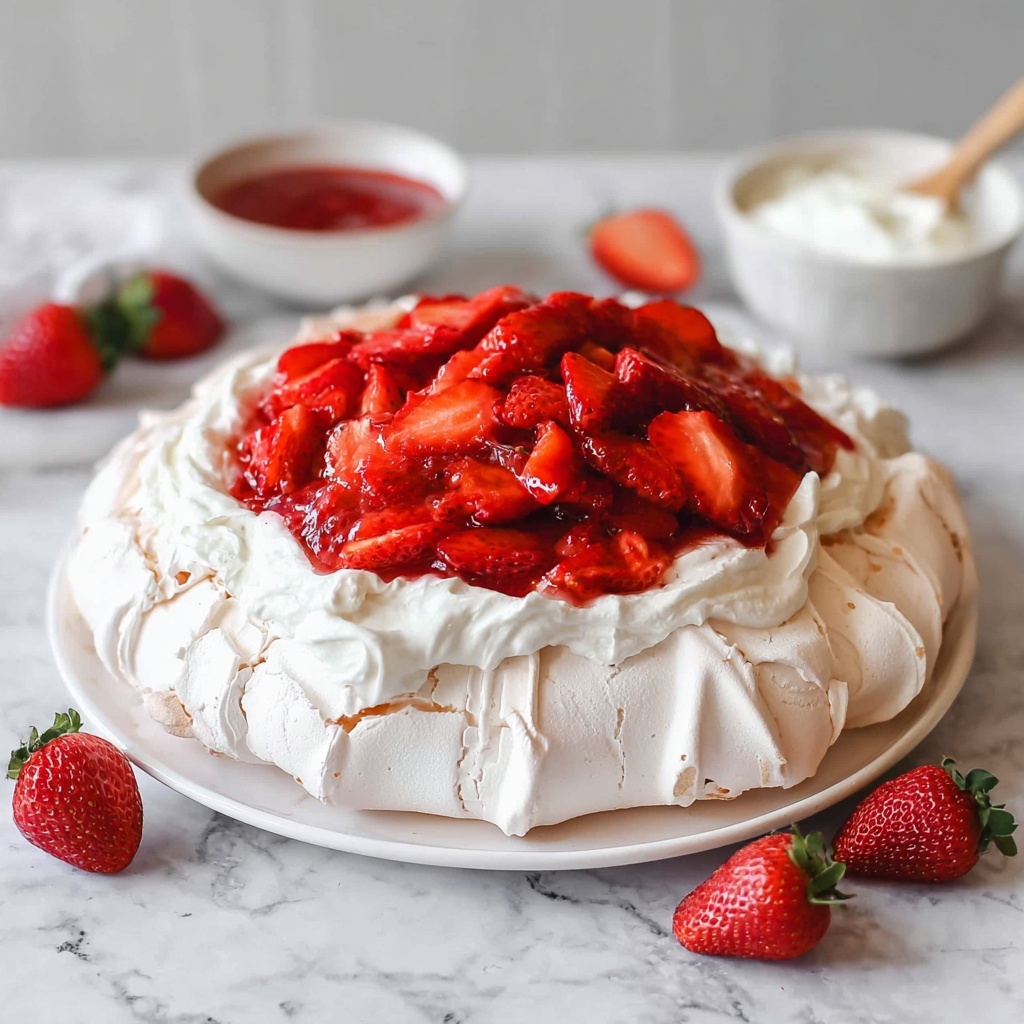
If you have a sweet tooth and love exploring plant-based twisted classics, this Vegan Pavlova Recipe is going to become your new obsession. Imagine a crispy, light-as-air meringue shell that cradles fluffy vegan whipped cream and juicy fresh strawberries, creating a dessert that’s as stunning to look at as it is delightful to eat. Perfect for special occasions or a sunny afternoon treat, this recipe replaces traditional egg whites with aquafaba, keeping every bite vegan and incredibly luscious.
Ingredients You’ll Need
Simple, natural ingredients combine harmoniously in this recipe to create the perfect vegan pavlova. Each component plays a key role in the final texture, flavor, and appearance, ensuring your dessert is both beautiful and delectable.
- Aquafaba (350 ml): The magic liquid from chickpeas that whips up into a stunning meringue substitute, providing structure and volume.
- Cream of tartar (¼ teaspoon): Stabilizes the aquafaba to help it hold its fluffy shape during baking.
- Xanthan gum (½ teaspoon): Improves texture and helps maintain that crisp-shell-with-soft-center effect.
- Superfine sugar (200 g): Sweetens and adds the gloss and crunch classic to pavlova’s crust.
- Vanilla extract (1 teaspoon): Infuses subtle, warm aroma and depth of flavor.
- Cornstarch (1 tablespoon, plus extra for dusting): Creates the delicate crust and soft interior contrast.
- Vegan whipped cream (½ batch): Rich and airy topping that complements the meringue’s sweetness perfectly.
- Fresh strawberries (400 g): Adds fresh natural sweetness, vibrant color, and juiciness to each bite.
- Strawberry coulis (½ batch, optional): A luscious drizzle to elevate the flavor and make it truly decadent.
How to Make Vegan Pavlova Recipe
Step 1: Reduce the Aquafaba
This part is crucial for achieving that perfect meringue texture. Pour your aquafaba into a saucepan and simmer it gently until it reduces to half its volume, concentrating the proteins and sugars. This will ensure your pavlova whips up beautifully with a sturdy yet fluffy consistency.
Step 2: Chill the Aquafaba
Let the reduced aquafaba cool completely to room temperature before transferring it to the fridge. Chilling it helps create that glossy finish when whipped while improving overall stability.
Step 3: Prepare Your Equipment Thoroughly
Grease is a meringue’s worst enemy! Clean and dry your mixing bowls and beaters meticulously. Wiping them down with lemon juice or vinegar helps eliminate any residue that might prevent the aquafaba from whipping properly.
Step 4: Whip the Aquafaba
Combine your chilled aquafaba with cream of tartar and xanthan gum in a large bowl. Whip on high speed for about 10 minutes until soft peaks form. This is the first step toward building that iconic pavlova texture.
Step 5: Add the Sugar Gradually
Add your superfine sugar one tablespoon at a time, whisking well after each addition. Patience here is key—this slow incorporation allows the sugar to dissolve fully, giving your pavlova its signature shine and crunch.
Step 6: Incorporate Vanilla and Cornstarch
Stir in the vanilla extract for fragrance, then whisk in cornstarch. The cornstarch aids in texture, helping create that delightful contrast between a crisp outer shell and soft, marshmallow-like center.
Step 7: Shape the Pavlova
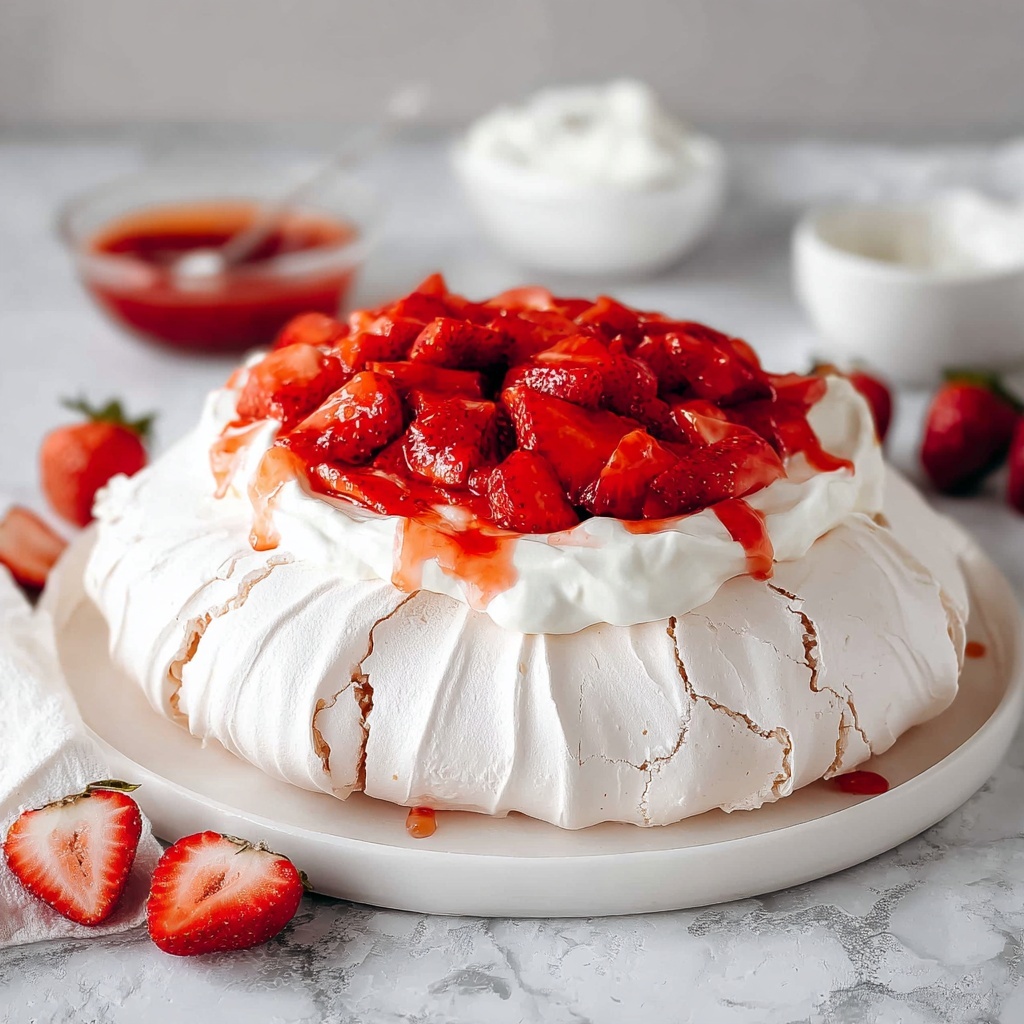
Spread the meringue mixture onto a parchment-lined baking sheet dusted lightly with cornstarch. Form a round disc, making the edges slightly higher to create a crater in the middle—perfect for holding the whipped cream and fruit topping.
Step 8: Bake and Cool Without Opening the Oven
Bake your pavlova at a low temperature for two and a half hours to dry it out gently. Resist the urge to open the oven door during this time! After baking, turn off the heat and let the pavlova cool inside the oven for one to two hours to avoid cracks and maintain that tender center.
How to Serve Vegan Pavlova Recipe
Garnishes
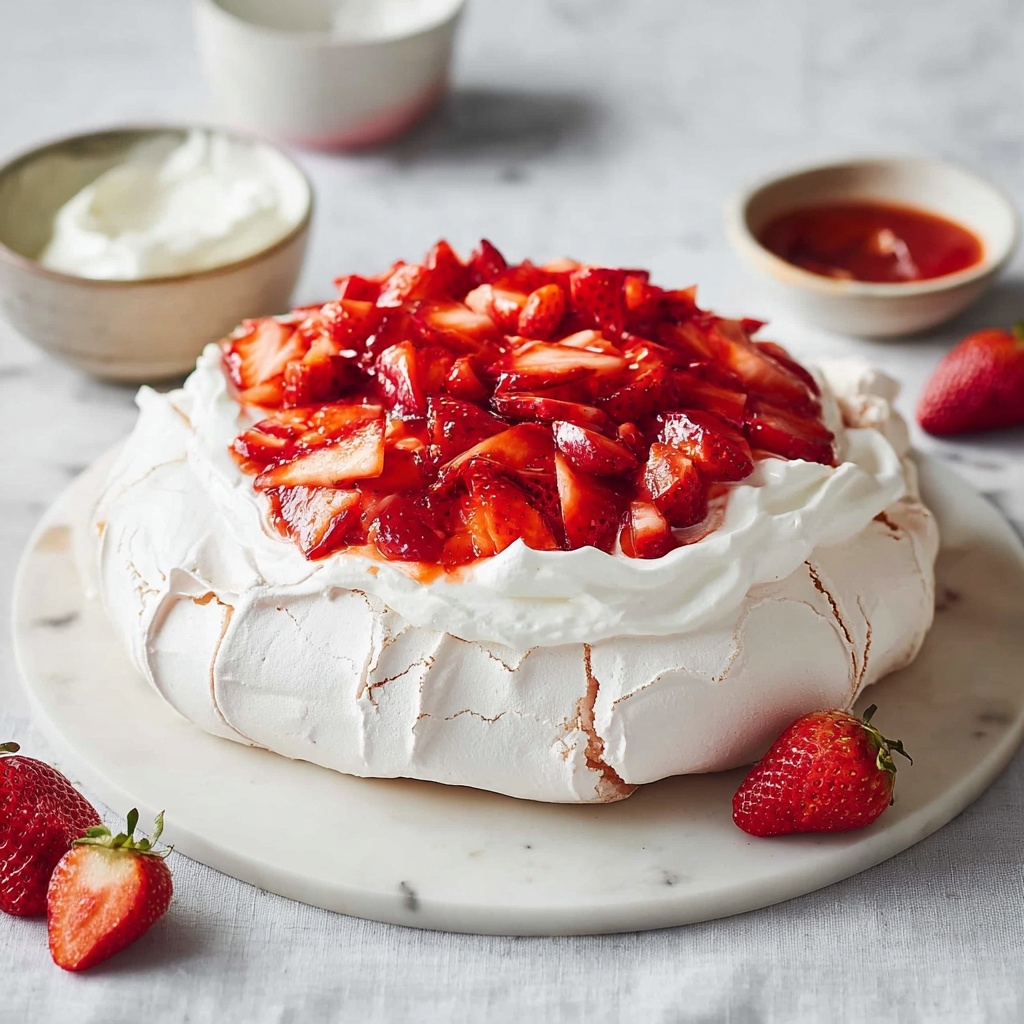
Decorate the pavlova just before serving with a generous swirl of vegan whipped cream and a vibrant pile of fresh strawberries or your favorite seasonal fruits. A drizzle of strawberry coulis adds a tangy-sweet flair that perfectly balances the sweetness of the meringue.
Side Dishes
Keep the focus on this beautiful Vegan Pavlova Recipe by pairing it with light, refreshing options like a crisp green salad or a chilled glass of sparkling fruit juice. These help cleanse the palate and highlight the dessert’s delicate textures.
Creative Ways to Present
Try layering the pavlova in individual glass cups for elegant single servings, or add edible flowers and mint leaves for a garden-fresh look. No matter how you present it, this dessert will be the star of any table.
Make Ahead and Storage
Storing Leftovers
Since pavlova easily absorbs moisture, it’s best to store leftovers unadorned in an airtight container at room temperature for up to 24 hours. Adding toppings in advance will make it soggy, so keep decorations separate until ready to serve.
Freezing
Freezing pavlova is not recommended due to its delicate texture. The crispy exterior turns chewy, and the soft center loses its signature fluffiness upon thawing.
Reheating
Reheating is generally unnecessary and can ruin the texture. If you prefer it slightly warmed, let it sit at room temperature for about 30 minutes before serving.
FAQs
Can I use canned chickpea liquid for aquafaba?
Yes! The liquid from canned chickpeas works perfectly as the base for aquafaba. Just be sure to choose a brand without added salt or preservatives for best results.
What if I don’t have xanthan gum?
You can try substituting with guar gum, but the texture might differ slightly. If you skip it altogether, your pavlova may be less stable and more prone to collapsing.
How do I know when the meringue is ready to bake?
When the aquafaba forms stiff, glossy peaks that hold their shape without drooping, it’s ready. The mixture should feel thick and silky to the touch and not grainy.
Can I use other fruits besides strawberries?
Absolutely! Berries like raspberries, blueberries, or sliced kiwi and peaches also pair beautifully with the vegan pavlova, offering delicious variety and color.
Is this recipe allergy-friendly?
This Vegan Pavlova Recipe is free from eggs, dairy, and nuts (unless you add nuts as garnish), making it suitable for many common allergies. Always check your vegan whipped cream ingredients for any allergens.
Final Thoughts
This Vegan Pavlova Recipe is a labor of love that rewards you with a dessert both impressive and comforting. It’s perfect for anyone wanting to enjoy that classic pavlova magic without any animal products. I encourage you to try it out—gather your ingredients, embrace the process, and get ready to wow your friends and family with this stunning, scrumptious treat.
Print
Vegan Pavlova Recipe
- Prep Time: 30 minutes (plus at least 2 hours chilling for aquafaba reduction)
- Cook Time: 2 hours 30 minutes
- Total Time: 5 hours (including cooling and chilling times)
- Yield: 8 servings
- Category: Dessert
- Method: Baking
- Cuisine: Vegan
- Diet: Vegan
Description
This Vegan Pavlova is a delightful plant-based twist on the classic dessert, featuring a crisp and airy aquafaba meringue base topped with luscious vegan whipped cream and fresh strawberries. Ideal for special occasions or a sweet treat, this recipe uses aquafaba as an egg white substitute to create a light, fluffy texture without any animal products. The pavlova is baked low and slow until perfectly crisp on the outside and soft inside, then garnished with fresh fruit and optionally drizzled with strawberry coulis for added flavor.
Ingredients
Meringue Base
- 350 ml aquafaba (liquid from cooked chickpeas or canned, see notes)
- ¼ teaspoon cream of tartar
- ½ teaspoon xanthan gum
- 200 g superfine sugar (caster sugar)
- 1 teaspoon vanilla extract
- 1 tablespoon cornstarch (cornflour), plus extra for dusting
Toppings
- 1 batch vegan whipped cream
- 400 g fresh strawberries (or other berries or fruit)
- ½ batch strawberry coulis (optional)
Instructions
- Preparation of Aquafaba Reduction: Pour the aquafaba into a saucepan and bring it to a boil. Reduce the heat and let it simmer until the liquid has reduced by half its original volume, generally about 5 minutes or longer. Carefully check the volume using a bowl on a scale or measuring cup. Once reduced, remove from heat and allow to cool to room temperature. Transfer the aquafaba to a jar and refrigerate to chill for at least 2 hours prior to making the meringue.
- Ensure Equipment is Clean: Make sure all mixing bowls, beaters, and utensils are thoroughly clean, dry, and grease-free. Wiping them with lemon juice or vinegar can help remove residual grease, which is vital for proper aquafaba whipping.
- Prepare Oven and Baking Tray: Preheat the oven to 125°C (257°F). Line a baking pan with parchment paper and dust a thin layer of cornstarch onto the parchment to prevent sticking and ease pavlova removal after baking.
- Whip Aquafaba Mixture: In a large clean bowl, combine the chilled aquafaba with cream of tartar and xanthan gum. Using an electric mixer or stand mixer, whisk on high speed for 10 minutes until soft peaks form.
- Add Sugar Gradually: Add the superfine sugar one tablespoon at a time, whisking for around 30 seconds after each addition. Continue this process until all sugar is incorporated, then whisk the mixture for an additional 10 minutes until it becomes thick, glossy, and forms stiff peaks.
- Add Flavor and Stabilizers: Whisk in the vanilla extract for about 1 minute. Finally, add the tablespoon of cornstarch and whisk for another 30 seconds to fully combine.
- Shape the Pavlova: Using a spatula, spread the meringue onto the parchment-lined tray in a round disc shape. Leave at least a 1-inch border from the edges of the tray, as the meringue will expand during baking. Create a crater in the center by lifting the edges higher with a spoon or spatula to hold toppings later.
- Bake the Pavlova: Bake in the preheated oven for 2½ hours without opening the door to prevent cracks. Once baking time is complete, turn off the oven, leave the door closed, and allow the pavlova to cool gradually inside the oven for 1 to 2 hours until it reaches room temperature.
- Prepare Toppings: While the pavlova cools, prepare the vegan whipped cream and strawberry coulis if using.
- Decorate and Serve: Only decorate the pavlova just before serving to prevent the meringue from melting. Top with a generous layer of vegan whipped cream and scatter chopped fresh strawberries. Optionally drizzle with strawberry coulis. Slice into 8 servings and enjoy.
- Storage Tips: For best results, bake the pavlova the day before serving and let it cool gradually in the oven overnight. Store in an airtight container at room temperature. Do not pre-top with whipped cream or fruit until just before serving to maintain texture.
Notes
- Aquafaba is the liquid from canned chickpeas or cooked chickpeas; it mimics egg whites when whipped.
- Ensure no grease or moisture is in mixing bowls and beaters for the best whipping results.
- Be patient with the aquafaba reduction step to concentrate the proteins for stable meringue.
- Do not open the oven door during baking to avoid cracking.
- Top the pavlova only immediately before serving to keep the meringue crisp.
- Can be made with different fresh fruits to suit your taste.